Saturday, March 19, 2011
Connections
The Shakespearean masterpiece Macbeth holds some strong similarities to Great Expectations. From a chilling exposition within two veritable graveyards, one being a body strewn battleground and the other a foggy graveyard, these classics hold both the same lessons and the same themes.
Both characters, Pip and Macbeth, have a insatiable desire for social dominance. While their schemes may take different forms, both routes are nonetheless damaging to those around them. Macbeth's becomes a murderous tirade, while Pip distances himself from those who love him and, in essence, destroys those relationships. However, one distinguishing feature is their morality. While Macbeth only questions his actions once or twice, both times being eventually egged on by his ambitious wife, Pip falls into a constant spiral of self blame and guilt. While Shakespeare and Dickens successfully tackle the same morals of human error and mistake, they utilize different methods.
This idea holds true within the characters and plots as well. As said before, both characters are deeply ambitious. However, this also goes for those around them. Both Macbeth and Pip have acquaintances that are desperate and eager to reap the rewards of their social status. Whether its a pushy wife, or a desperate Mr. Pumblechook and Mrs. Joe, both characters bear not only the expectations of themselves, but those around them. Similarly, both characters were fed their ambition. Macbeth spoke with three devious witches, and Pip played with an equally devious Mrs. Havisham and Estella.
While these paragraphs only show a couple of the similarities between these two literary masterpieces, it cannot be denied that their plots reflect each other. It can be said that, whatever the reason, these two great authors took advantage of the same angles to show their stories' common purpose.
Saturday, March 12, 2011
Second Stage
When Mr. and Mrs. Pocket are introduced, it might seem as if they have little to do with the themes and motifs of Great Expectations. However, upon closer examination, we find that many of their actions and characteristics have a strong correlation with the purpose of the novel thus far. For instance, Mrs. Pocket longs for social status and position, a power that she feels she has been robbed of. Mr. Pocket, on the other hand, is content to remain as he is and maintain a realistic and sensible approach to their lives. While their personalities seem to clash several times during Pip's visit, it is important to see their relationship to another two characters in the book (in correspondence to the Doubles motif).
Pip and Joe have a similar relationship. Pip longs for status as well, while Joe would be happy to remain a blacksmith for the rest of his life. While he would not begrudge Pip his great expectations, he is more apt to maintain an unromantic view of the world. When Pip observes the chaotic atmosphere of the Pocket's household, he seems unable to reflect upon their relationship as a contrast to his own. In fact, Mrs. Pocket's struggle with the life she has and the life she feels she deserves makes him uncomfortable. This shows how removed Pip is from his childhood. He views the world only in relation with his own desires and thoughts, and so fails to experience objectivity. His obsession with social growth leaves him cold and subjective, and his inflated ego leaves him unable to see the similarities between himself and those around him.
Friday, March 4, 2011
Pip's Quote
This quote is Pip's reaction towards his disturbing and uncomfortable introduction into the world of high society. What I find interesting is how he appears to be inspired by Mrs. Havisham, rather than experiencing the great aversion most of us might feel. As a testament to his naivety and ignorance regarding the consequences of affluence and class, he is only fixated upon the aspects of her life that he finds most appealing (those being her possessions and authority). Within these chapters Pip begins to evolve into an ambitious and resentful teenager who is greatly embarrassed of his roots and aspires to be "uncommon". In many ways, he is experiencing a natural growing pain that accompanies the emotional, and hormonally motivated, distancing from his home life. Like a pip, he is burgeoning into something entirely different (and let it be noted, not necessarily positive) than what he was upon conception. His sudden aversion to his hands, a stain of his impoverished childhood, signifies this change within himself. Throughout the novel, he uses inanimate objects to coldly and objectively describe those around him. Through the evolution of the chapters, he slips into the same habit with his beloved uncle Joe. These changes, among others, show his growing desire for all that he was denied as a child. As his thirst and obsession with social hierarchy mounts, the substance of his character diminishes into the dust from whence he came.
I don't believe I ever had a moment of epiphany in which I was compelled to lay out the rest of my life before me in a chain. Life does not work like string of dominoes reacting in a rational, cause and effect manner. Rather (and as I think it may be with most people), it is more likely that our futures and desires change from day to day with our mood and character. Every we day we are christened with a different name, and another clean canvas upon which we are compelled to scribble as we choose. That is the beauty of not just being human, but being raised in a privileged environment with a multitude of opportunities. Pip might not necessarily be referring to a future that he is bound to, but rather the general direction in which he aspires to grow. After all, plants are not apt to grow straight up, but towards the strongest light in the room.
Saturday, February 12, 2011
TIOBE
Just as the characters manipulate the themes of Aestheticism to justify their social decisions, their skewed morality is also evident in their tendency to extrapolate or even make up an opposing truth. No longer is it necessary to judge them upon their earnestness, but rather to the degree in which they thrive upon deception. In every case of private, or even public deception, it seems that they are always able to connect their lie to a standard of artistic principle. For instance, when Jack and Algeron are revealed to be only negligent dandies, and not to encompass the earnestness that Cecily and Gwendolyn so desire in a prospective mate, Gwendolyn guides Jack to the excuse that their dishonesty was only, “…in order that you might have the opportunity if coming up to town to see me as often as possible…”(74). Although she knows this is not the truth, Gwendolyn is more willing to accept a poorly concealed pretense than a reality that would challenge her aesthetic scruples. She uses these guidelines to justify the lies of her counterpart, as well as solidify the imaginary and far more desirable world where appearance is everything, and men are handsome objects that are not prone to moral indiscretion. Similarly, and in correspondence with the idea of aesthetic appearance, Lady Bracknell presents a strange perspective when she says that, "Thirty-five is a very attractive age. London society is full of women who have, of their own free choice, remained thirty-five for years." (82) It is illuminated through this quote the intense power that appearance holds over the characters of the play. The aristocratic women are so involved with their youth as an extension of their fashionable selves that when their bodies begin to turn upon them, they are more likely to live a charade than forfeit the unrealistic work of art that is their life. This same distortion of truth can not only be seen within the relationships of the characters, but within their treatment of themselves and society in general. For example, towards the beginning of Act 1, as Lady Bracknell interviews Jack as a suitor for Gwendolyn, she says, "I do not approve of anything that tampers with natural ignorance. Ignorance is like a delicate exotic fruit; touch it and the bloom is gone." This quote exhibits the blindness that accompanied the irrational extremes of aestheticism during the Victorian Era. Once again, the characters are comfortable with distorting the truth to preposterous extremes in order to protect the artistic, and therefore chic, components of their lives.
I didn't change much, although it should be said that my group all needs to avoid redundancy. Our topics (especially Ragan's) are extremely similar and tend to overlap. We need to keep an eye on this!
Thursday, January 27, 2011
Dishonesty in The Importance of Being Ernest
Whether it is a negligent vacationing under the false name of Ernest, escaping the tedious trivialities of domestic life by Bunburying, or simply moments of "mental abstraction" that lead to life altering mistakes, all the characters in The Importance of Being Earnest have potentially devastating secrets of some kind. Coping with the treacherous battlegrounds of the Victorian society has lead each of them to evolve into complex individuals with equally confusing lives, to the point where the lines of reality and unreality blur together into a cacophonous, variegated blur of deceit and absence of truth. No longer is it necessary to judge characters by their earnestness, but rather to the degree in which they thrive upon deception.
For instance, Algernon and Jack both adapt their lives to the ideology of the Bunburyist. However, Jack uses his imaginary brother as a method of attaining the life of hedonistic asceticism that he feels he has been denied. On the other hand, Algernon only plays into the preconceptions of others in pursuit of a woman he feels an outlying attraction to. This, paired with his charming, "Wilde-esque" wit and dashing good looks, make him a more likely protagonist than Jack. Ironically, the inventor of "Ernest" appears to be the least earnest of the play, not necessarily because of his actions (which are reciprocal of Algernon's), but rather because he has the moral foundation to recognize that the life of his concoction is wrong.
In the end, it seems clear that the pressures and stress of moral and societal conventions during the Victorian Era lead the character's to their paths of deceit. In firm recognition that morality does not always lead to happiness, they have brought themselves to paradoxical zeniths of unreality and, when reality returns, cataclysmic lows. Whatever their social standing, occupation, moral foundation or marital status, they all respect and understand the importance of not being earnest.
For instance, Algernon and Jack both adapt their lives to the ideology of the Bunburyist. However, Jack uses his imaginary brother as a method of attaining the life of hedonistic asceticism that he feels he has been denied. On the other hand, Algernon only plays into the preconceptions of others in pursuit of a woman he feels an outlying attraction to. This, paired with his charming, "Wilde-esque" wit and dashing good looks, make him a more likely protagonist than Jack. Ironically, the inventor of "Ernest" appears to be the least earnest of the play, not necessarily because of his actions (which are reciprocal of Algernon's), but rather because he has the moral foundation to recognize that the life of his concoction is wrong.
In the end, it seems clear that the pressures and stress of moral and societal conventions during the Victorian Era lead the character's to their paths of deceit. In firm recognition that morality does not always lead to happiness, they have brought themselves to paradoxical zeniths of unreality and, when reality returns, cataclysmic lows. Whatever their social standing, occupation, moral foundation or marital status, they all respect and understand the importance of not being earnest.
Sunday, January 9, 2011
Animal Farm Project Evaluation
Ragan
Project: Photo
I believe that Ragan successfully portrayed the prominent themes of the novel through her photograph. Besides a pleasing composition, it offers details that effectively communicate her perspective on the book. For instance, the way the pig bows to the photograph parallels their eventual succumbing to the luxuries and corruption of human power. It also shows Napoleon's intimate similarity to the Russian tyrant, Stalin. Furthermore, since the windmill was such a powerful symbol, I appreciated how she managed to artistically include it as well. Encore!
Levi
Project: Movie
Levi's project is (as always) a cerebral achievement that inspires its viewers to sip a spot of tea and discuss the irony of equality, as well as inner relationships in the proverbial "crapper". Besides being well made, it covered practically all the nuances of the novel in one dryly humorous conversation. As a project it demonstrated his understanding of the book itself, as an video it was entertaining and engaging. Bravo!
Leanna
Project: Poster
Leanna's poster was very well done and translated the relationship between Napoleon and Stalin extremely well. I appreciated her use of both photos and art to engage the viewer and draw them in to her project. Clearly she appreciated the parallels between Animal Farm and the Russian Revolution as one of the strong themes of the novel. Bravo!
Connor F.
Project: Comic Strip
By far one of the best projects I have seen thus far, Connor's comic strip showed his understanding of the novel as well as his artistic ability! From a detailed template, to stunning pictures, I really appreciated the obvious time he had invested on his project. Well done Connor, and I look forward to seeing more of your work in the future!
Daniel
Project: Poster
Daniel did a very good job on his poster. The only one I have seen to actually apply cut and paste heads on the animals, I believe he made it easy and accessible for people even if they have not studied the novel. I appreciated his use of dynamic color to intrigue his audience. Well done!
Kelsey
Project: Comic Strip
I think Kelsey did a wonderful job creating a "comic strip" version of the relentless idiocy that is the saga of the windmill. I think she correctly informed her viewer on its monotony and repetition, while maintaining a fun and colorful style that carried her audience from strip to strip. She clearly enjoyed the novel and had fun creating her project. Encore!
Daniel M
Project: Poster
Perhaps one of the most polished projects of our class, Daniel did a wonderful job presenting the general themes of the novel. His cartoon animations were fun and interactively portrayed each element that surfaced throughout the book. I enjoyed his use of template as well, which satisfyingly presented his work. Well done!
Emily
Project: Comic Strip
Emily did a wonderful job on her project! Her drawings were both fun and amusing, while still intelligently presenting the parallels between the Russian Revolution and Animal Farm in a way I have not seen before. I look forward to seeing more of her work, which shows understanding of the concepts of the novel as well as her enjoyment of producing a creative interpretation of its themes. Bravo!
Sidney
Project: Poem
Sidney's poem did a fine job of both presenting the themes of the novel and its plot. I appreciated that she chose to create a poem, as that seemed to be a minority in our class. Her writing shows both conceptual understanding as well as comprehension of the provided assignment! Well done!
Emma
Project: Movie
Emma's movie was fun and engaging. She wisely chose to make a trailer, which was a more direct way of attacking all the individual themes of the story. I appreciated her dynamic and artistic use of medium to more professionally show her comprehension. Bravo!
Andrea
Project: Strip/Movie
I don't want to compare myself to other students in my class. I believe English is not only about mastering and harnessing linguistic skills and capability, but also about presenting a unique and individual perspective. We all have different ways of doing this, some of which are more widely appreciated than others. I believe my project was not my best work, and not my worst either. While it might not have had the visual charm of some of my peer's work, it wasn't an eyesore either. I strongly believe individual improvement begins with looking objectively at oneself, not critically at others.
Project: Photo
I believe that Ragan successfully portrayed the prominent themes of the novel through her photograph. Besides a pleasing composition, it offers details that effectively communicate her perspective on the book. For instance, the way the pig bows to the photograph parallels their eventual succumbing to the luxuries and corruption of human power. It also shows Napoleon's intimate similarity to the Russian tyrant, Stalin. Furthermore, since the windmill was such a powerful symbol, I appreciated how she managed to artistically include it as well. Encore!
Levi
Project: Movie
Levi's project is (as always) a cerebral achievement that inspires its viewers to sip a spot of tea and discuss the irony of equality, as well as inner relationships in the proverbial "crapper". Besides being well made, it covered practically all the nuances of the novel in one dryly humorous conversation. As a project it demonstrated his understanding of the book itself, as an video it was entertaining and engaging. Bravo!
Leanna
Project: Poster
Leanna's poster was very well done and translated the relationship between Napoleon and Stalin extremely well. I appreciated her use of both photos and art to engage the viewer and draw them in to her project. Clearly she appreciated the parallels between Animal Farm and the Russian Revolution as one of the strong themes of the novel. Bravo!
Connor F.
Project: Comic Strip
By far one of the best projects I have seen thus far, Connor's comic strip showed his understanding of the novel as well as his artistic ability! From a detailed template, to stunning pictures, I really appreciated the obvious time he had invested on his project. Well done Connor, and I look forward to seeing more of your work in the future!
Daniel
Project: Poster
Daniel did a very good job on his poster. The only one I have seen to actually apply cut and paste heads on the animals, I believe he made it easy and accessible for people even if they have not studied the novel. I appreciated his use of dynamic color to intrigue his audience. Well done!
Kelsey
Project: Comic Strip
I think Kelsey did a wonderful job creating a "comic strip" version of the relentless idiocy that is the saga of the windmill. I think she correctly informed her viewer on its monotony and repetition, while maintaining a fun and colorful style that carried her audience from strip to strip. She clearly enjoyed the novel and had fun creating her project. Encore!
Daniel M
Project: Poster
Perhaps one of the most polished projects of our class, Daniel did a wonderful job presenting the general themes of the novel. His cartoon animations were fun and interactively portrayed each element that surfaced throughout the book. I enjoyed his use of template as well, which satisfyingly presented his work. Well done!
Emily
Project: Comic Strip
Emily did a wonderful job on her project! Her drawings were both fun and amusing, while still intelligently presenting the parallels between the Russian Revolution and Animal Farm in a way I have not seen before. I look forward to seeing more of her work, which shows understanding of the concepts of the novel as well as her enjoyment of producing a creative interpretation of its themes. Bravo!
Sidney
Project: Poem
Sidney's poem did a fine job of both presenting the themes of the novel and its plot. I appreciated that she chose to create a poem, as that seemed to be a minority in our class. Her writing shows both conceptual understanding as well as comprehension of the provided assignment! Well done!
Emma
Project: Movie
Emma's movie was fun and engaging. She wisely chose to make a trailer, which was a more direct way of attacking all the individual themes of the story. I appreciated her dynamic and artistic use of medium to more professionally show her comprehension. Bravo!
Andrea
Project: Strip/Movie
I don't want to compare myself to other students in my class. I believe English is not only about mastering and harnessing linguistic skills and capability, but also about presenting a unique and individual perspective. We all have different ways of doing this, some of which are more widely appreciated than others. I believe my project was not my best work, and not my worst either. While it might not have had the visual charm of some of my peer's work, it wasn't an eyesore either. I strongly believe individual improvement begins with looking objectively at oneself, not critically at others.
Monday, January 3, 2011
Animal Farm Project
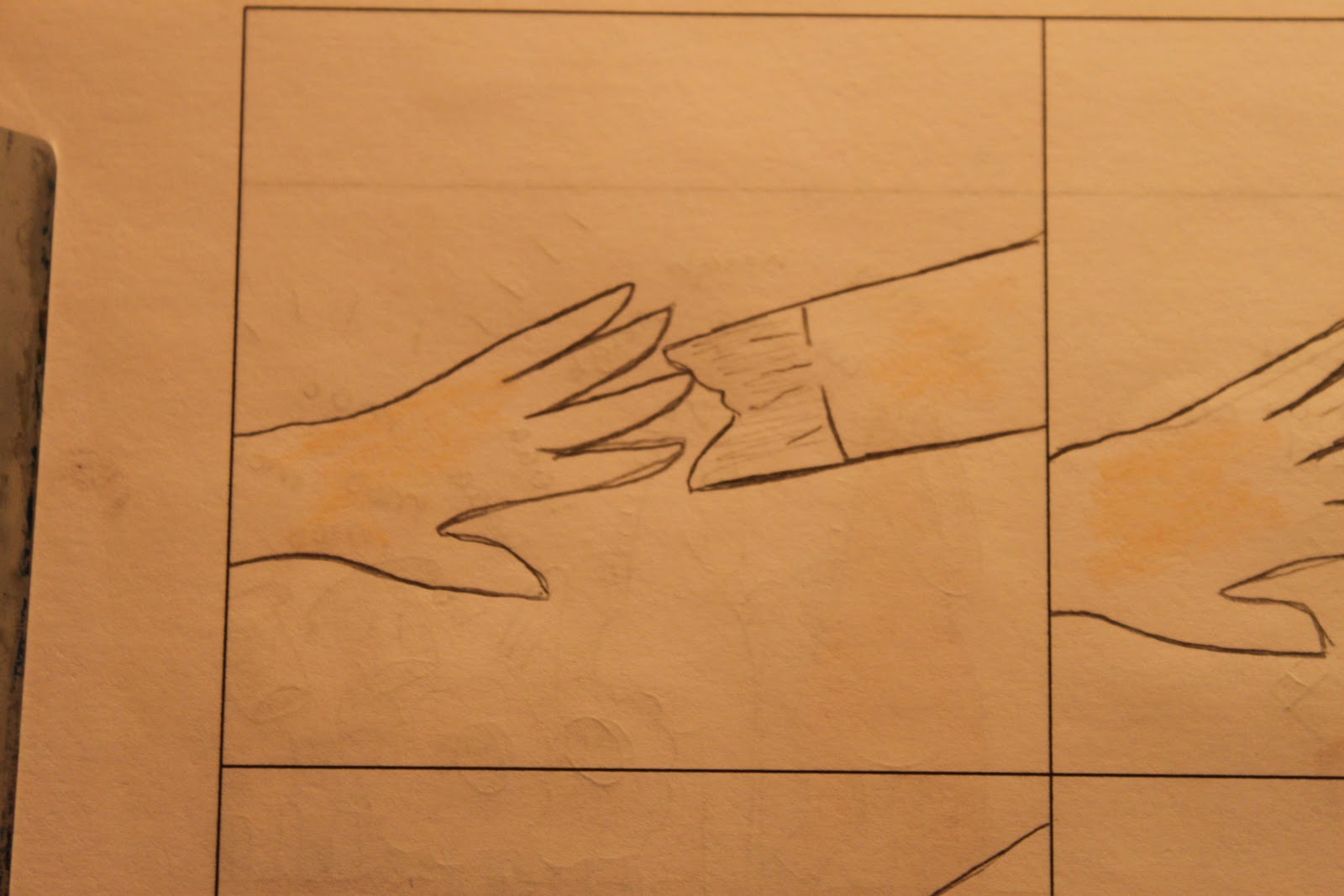
This is only a part of my project, over the next day I will be uploading two videos.
Video 1
"The life of an animal is misery and slavery, that is the plain truth".
Subscribe to:
Posts (Atom)